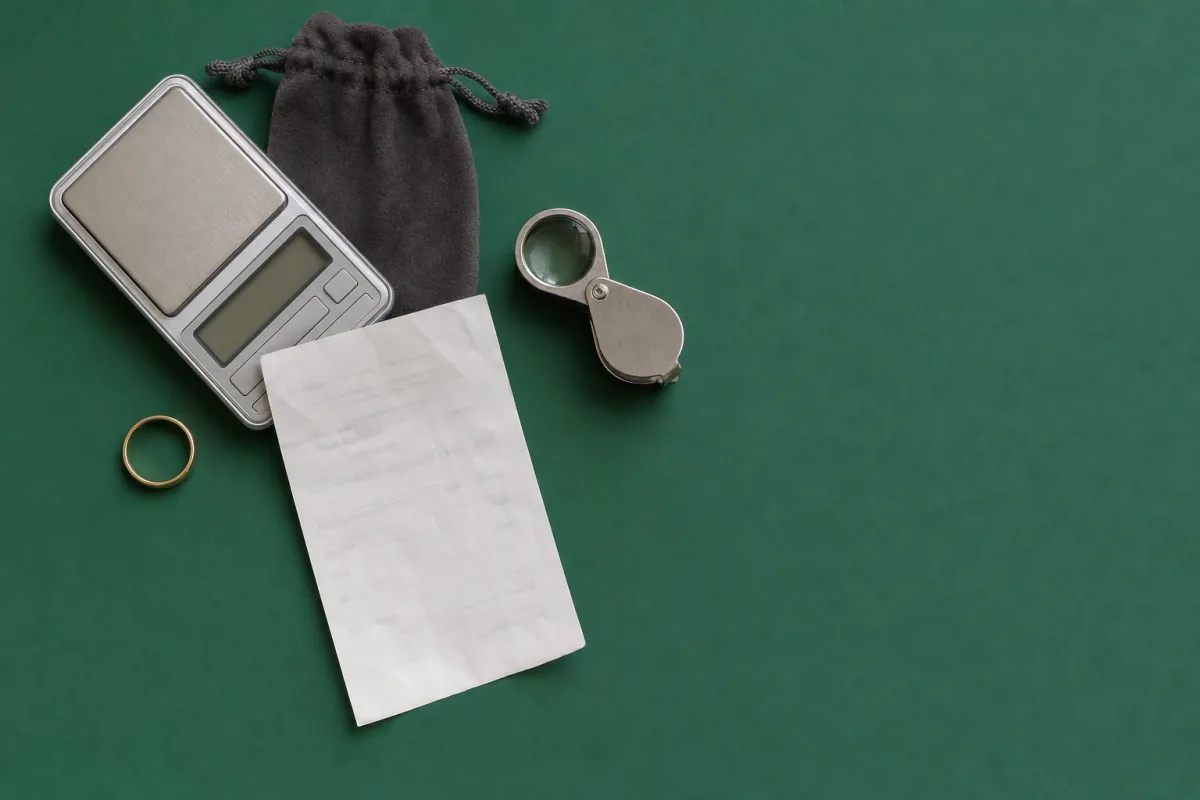
A pawnshop makes money at 2% a month because that's 24% a year, on a loan already sitting in its safe as gold.2 The law caps the rate, and the gold means it rarely has to chase anyone. I don't have one shop's books, so I've built this from a lot of law and one listed chain.
Small number, big year
Two percent sounds like nothing, which is a lovely thing for a number to sound like. Sothi Rachagan, a former law dean at Universiti Malaya, wrote in 2021 that it's the highest rate charged by any licensed credit provider in Malaysia.
Legal ceilings on a year's interest, in %
I've left banks off because their nearest match doesn't charge the same way. A pawnshop, he writes, wants only your IC or passport and something to hold.
He isn't a fan, and his objection is fair: the top rate falls on people with the least. The nickname he also reports is "bankers for the poor", and I think both are true of the same counter.2
That nearest match is ar-rahnu, the Islamic version, which banks offer too, as he set out in a second piece in 2021. It mostly charges on the value of what you leave, not what you borrow.3 So in one example he gives, a RM1,000 pledge costs RM6.50 a month, which beats a pawnshop's RM14 on a RM700 loan and loses to its RM5 on a RM250 one.3
What the ticket really says
Say you pawn a ring for RM1,000 and come back six months later. That's up to RM20 a month, so RM120.2
What happens to a pledge
Here's what I hadn't expected. If the loan was more than RM200, the shop doesn't simply keep your ring.2 It goes to auction, where the pawnbroker may bid, and any surplus above the loan and the profit is yours if you claim it within four months.
After that, it goes to the accountant-general. Rachagan calls this a "nonsensical provision", because he says pawners aren't told when the auction happens.2
At RM200 or less it's different. The item becomes the pawnbroker's, whatever it's worth, so a small loan on a good ring is where gold really can walk out cheaply.2
The Act also stops at loans of RM10,000, and he says nothing makes clear what covers the bigger ones.2 I'd want that answered before borrowing above the line.
One chain's numbers
Well Chip came to Bursa in 2024, and The Edge's report on the listing is the nearest thing I found to a look inside. It lends 60% to 70% of what the gold would cost to replace at retail, on average.1
The report puts its interest rate at about 20% and its default rate at about 10%, where a broker's note from Kenanga in 2025 says 7% to 8%.5 My own sum agrees on the interest: strip out the jewellery sales, set what's left against the money it had out on pledges, and you get about a fifth.1 That's near the legal ceiling for a whole book of loans.
The answer the report gives on the defaults is that the shop still holds the collateral, so "you may get back 100% of what you lend".1 The chairman said 70% of customers are repeat customers.1 I read that as less an emergency than a standing arrangement.
I'd take that cushion with a pinch of salt. A retail price includes the making and the shop's own margin, I'd guess, so a fall in gold could bite sooner than 60% suggests.1
Why there's a jewellery counter
The same report says about 60% of Well Chip's revenue in its 2023 financial year came mainly from retailing and trading gold and jewellery.1 On that, it's a gold shop with a lending desk. I couldn't find how the net profit splits, and I'd bet it splits the other way.
Kenanga's note points the same way, with a gross margin of about 80% on pawnbroking and about 50% once the retail sale of scrap gold and collateral is counted.5 I read that as some of the stock beginning as someone's unredeemed pledge, since the pawnbroker can bid at auction. I couldn't find what share.
The Star's report on its later results shows the mix moving. In the last quarter of its 2025 financial year, pawnbroking brought in RM42.45 million against RM31.34 million for jewellery.4
Part of that is bought, since it picked up three outlets in the north that year. But the company had also told The Edge that dearer gold would lift its lending, because a loan's size follows the collateral's value.1 Same ring, bigger loan, same 2%, so more ringgit of interest.2
What it costs
I couldn't find a Malaysian pawnshop's cost lines, so I only have two hints. Kenanga's note says the group's outlets typically break even on a net basis within 18 to 24 months.5 So I'd guess a new counter's first year or more goes on its own rent and staff.
The other hint is more interesting. Well Chip's listing money was mainly for working capital and new pawnshops, because in this business the raw material is cash in the drawer.1
And that's the idea I'd take from it, even if you never go near a pawnshop. Once the law fixes your price, you can't grow by charging more. You grow by having more money out, on something you could sell tomorrow.
where I looked
- The Edge Malaysia, Main Market-bound Well Chip expects rising gold prices to boost lending, 2024 theedgemalaysia.com
- The Vibes, Pawnbrokers: lifeline or death knell for the poor, Sothi Rachagan, 2021 thevibes.com
- The Vibes, Ar Rahnu: benevolent pawnbroking, Sothi Rachagan, 2021 thevibes.com
- The Star, Well Chip posts FY25 net profit jump to RM86.15mil, 2026 thestar.com.my
- Kenanga Research, Well Chip Group: Worth Its Weight in Gold, 2025 kenanga.com.my