How a pest control firm turns one cockroach into a yearly contract
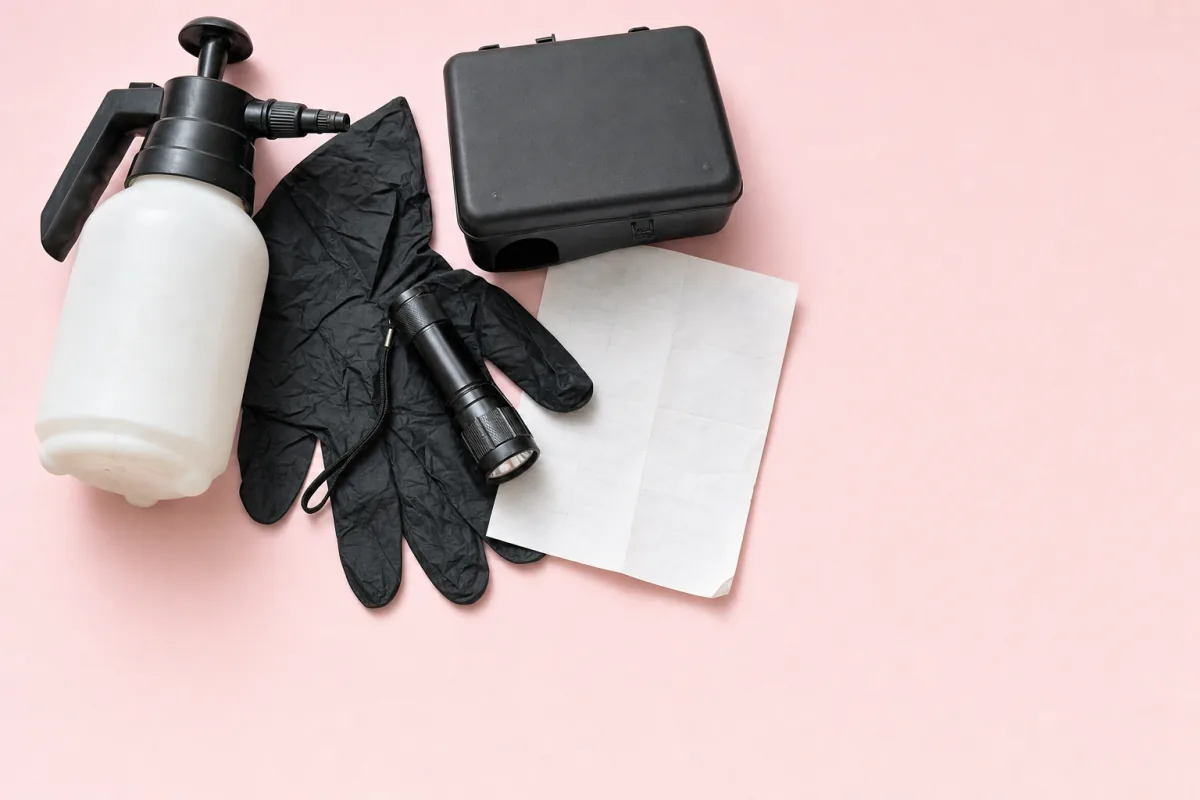
A pest control firm turns one cockroach into a yearly contract by selling you what you really want, which is to stop thinking about cockroaches. The visit pays once. The schedule keeps paying, and I don't think that's a trick so much as an accurate reading of your building.
The cockroach isn't really the customer
The Pest Control Association of Malaysia's FAQ is the most honest sales document I found. It calls a can of household spray "at best, a temporary solution", because it can't reach sewer runs, rubbish chutes and manholes.2
It's just as frank about flats. Boxed-in pipes and false ceilings, it says, are "well-concealed highways for cockroaches, rats, ants and termites".2 And it says a pest contract for your own unit is still "extremely useful".2
That's a trade body talking, and its members sell the contracts. I still think it's mostly right on this one.
You weren't visited by a cockroach. You live on its road.
How one cockroach becomes a schedule
The second box matters more than it looks. The FAQ says help can't be given properly without a survey on site.2 So the firm gets to stand in your kitchen, with a torch, while you're at your most persuadable.
The nearest thing to accounts
The only Malaysian prices I could find sit on pest firms' own undated sales pages, so I've left them out, and I couldn't find any Malaysian firm's split between contracts and call-outs. So here's a yardstick instead, and it's a big one.
Rentokil is a global group whose 2024 annual report is written for shareholders, who like this sort of thing.
"We are a subscription-based business," it says.1 It says most of its service customers' business recurs through annual contracts, the rest being one-off jobs, and that in most regions it can raise prices with inflation and still keep customers.1
Then there's the number I'd want to know. In its Asia and MENAT region, which puts Malaysia in with India, China and Turkey, it kept 80.7% of its customer portfolio by value in 2024.1 That's one global group across a wide region, so it says nothing precise about a Malaysian firm.
Still, here's my rough sum. If a firm loses about a fifth of its book each year, the average contract lives about five years.1
Visits paid for over five years, my made-up example
That's the whole pitch in one drawing, and it's why I'd expect a firm to treat the call-out as marketing that happens to pay.
Why the van likes it
The word that keeps coming up in Rentokil's report is route. It calls its service "route-based" and says it focuses on route density.1
As I understand it, that's the other half of the money. A contract tells the firm in advance who's on which street, so one van can do many stops close together. A panic call at dinner time is a van sent out for one kitchen.
Rentokil reported an adjusted margin of 18% on pest control in 2024.1 I wouldn't transplant that onto a three-van firm, since I'd guess a small operator has far fewer streets to fill. It does show what the model looks like when the routes are full.
The form is cheap, which is the problem
Here's the part that surprised me. A 2019 Borneo Post report lists what a licensed operator needs, including an operator's licence for the firm, an applicator's licence for staff and a licence to store pesticides.3 They must also record chemical use at clients' premises and hand over a report, Form F, after each treatment.3
That's a real paperwork load, but the form fee isn't a big cheque. One licensing consultancy puts that operator's licence application at "usually around RM400", and it sells help with exactly this, so hold that loosely.4 The harder requirement is a qualified applicator, who needs an SPM certificate or three years as an assistant.4
The competition you can't see
The same Borneo Post report cites the Agriculture Department's director-general, on an occasion it doesn't date, as saying illegal operators made up about 60% of pest control businesses.3 A licensed operator, with an obvious interest, says they charge "as low as 30% compared to licensed operators".3
I can't tell if he means 30% less or 30% of the price, but either way it's cheaper.3
I can't check either claim. But if they're anywhere near true, a one-off job is an auction against someone with no paperwork, and a contract is how you leave the auction.
So I'd read the contract the way I'd read a gym's, with a few plain questions.
- Which pests does it cover, and which cost extra?
- How often do they come, and what happens if they stop showing up?
- Will I get that Form F after every visit? It's what shows the schedule is more than a standing order.
where I looked
- Rentokil Initial plc, Annual Report 2024 rentokil-initial.com
- Pest Control Association of Malaysia, Frequently asked questions mpma.my
- Borneo Post, Advice not to engage unlicensed pest control operators, 2019 theborneopost.com
- Conzlab, How to get your LRMP licence, a licensing consultancy's guide, 2026 conzlab.com