How I'd choose floor tiles I won't hate in ten years
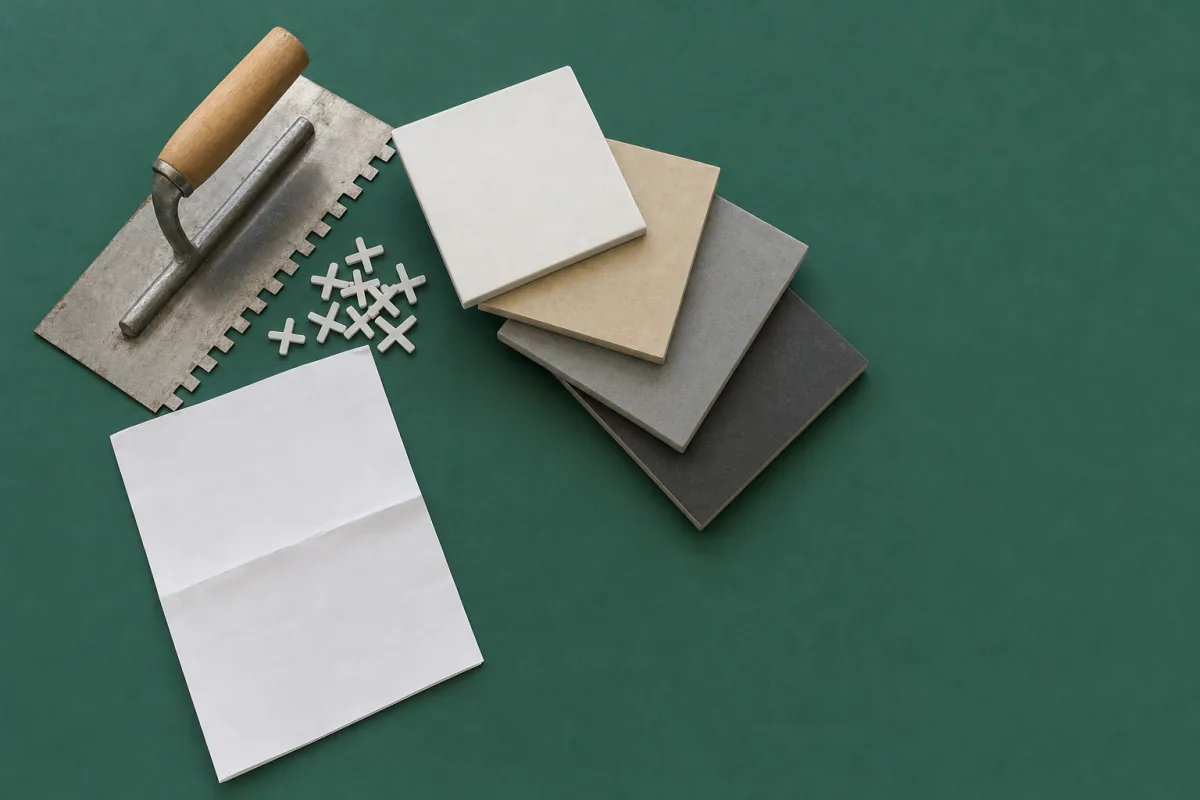
I'd choose floor tiles by reading three numbers before I let myself look at a single colour: water, wear and slip. Colour is the one thing about my future self I can't predict, and the numbers are what I'd be walking on.
What would I actually hate?
Taste moves, and no showroom can promise me otherwise. What I'd really hate is more specific.
- A bathroom floor I'm nervous on with wet feet.
- A worn grey path from the front door to the sofa.
- One cracked tile, and nothing left in the world that matches it.
All of those can be headed off at the counter, before any of the fun starts. Most of what follows comes from people selling tiles, because that's who I could find writing it down, so I've labelled them.
Start with the mark
EdgeProp reported that floor tiles have to be tested to Malaysian Standards, and named MS ISO 13006:2014 for ceramic ones.1 The testing and certification sit with a SIRIM unit, whose advice is to look for the "MS" mark before buying from any dealer.
That piece first ran in 2020, so I'd ask whether the edition has moved on.1 The habit of asking doesn't date, though.
Water: don't trust the word "porcelain"
Water absorption is how porous a tile is. A UK tile seller says porcelain is usually under 0.5%, and that ceramic absorbs more and is better kept to walls and dry indoor floors.3
A Chinese tile supplier's guide makes the sharper point: anything testing above that line is ceramic, however it's marketed.4 The supplier is quoting the international standard. I can't check it, because I couldn't open the standard itself.
So I'd ask for the figure rather than the word. In a bedroom, I wouldn't lose sleep over it. In a bathroom or out on the porch, I would.
Wear: enough, not the most
SIRIM's testers grind tiles with metal bearings and sort them into classes from 0 to 5, EdgeProp says, with 5 for the busiest floors.1 This is the PEI number you'll see on a spec sheet.
The UK seller calls PEI 3 suitable for most home floors, and PEI 4 and 5 suited to heavier traffic such as hallways and kitchens.3 So I'd want a 3 everywhere and might pay up for a 4 along that path from the door. Beyond that, I suspect I'd be buying durability for a shopping mall I don't own.
Slip: where the guides stop agreeing
This is the number I care about most, and the one the guides won't settle for me. The UK seller says R9 and R10 are fine for most indoor home floors, and R11 and above suit bathrooms, though the same guide later says R10 or higher for a family bathroom.3
Britain's safety regulator is colder about it. It says floors rated R9, and in some instances R10, will be slippery in wet or greasy conditions.2 It also doesn't rest on the R scale: its standard test is a pendulum, where 36 or more means low slip potential.2
That sheet is written for workplaces, not homes. And I couldn't find a Malaysian number for a home bathroom floor that I could actually open.
So here's my own call. On a wet floor, I'd want R11 or a wet pendulum result of 36, and I'd take the regulator's side over the sellers'.2 A slip costs a lot more than a slightly dearer box of tiles.
Shine is the other catch. The supplier's guide says polished tiles read as premium in a showroom, but that gloss reduces friction once water's around. Its example has two tiles with matching wear and water ratings and very different grip.
Wet grip in one supplier's example, on the DCOF scale
Showroom floors are dry, of course. That's rather the problem with showrooms.
The spare box
Tiles come in runs, and runs differ. Fireclay, an American maker, warns that a second run could end up looking different from the first.5 The supplier's guide says a carton should show its shade code, size class and lot or batch reference, so I'd read those on every box when they arrive, before whoever's laying them mixes anything.
Fireclay suggests at least 15 to 20% extra to cover cuts and handling, and around 5% on large commercial jobs.5 Those are one maker's figures for its own tiles, and I couldn't find a Malaysian equivalent. That extra also gets used up on the day.
The spare box is a separate purchase. I'd buy it from the same lot, write the lot number on the side and leave it somewhere dry for the year a pipe bursts or someone drops a wok.
If a shop's range includes it, I'd also lean towards a little variation in the pattern. Guides grade this from V1, very uniform, to V4.3 My guess is a slightly mottled tile hides a patch better than a flat one.
What I'd ask at the counter
- What's the water absorption for this series?
- What's its PEI class?
- What's the wet slip result, and by which test?
- Does it carry the MS mark?
- Can all my boxes, and the spare, come from one lot?
The supplier's guide suggests asking for signed third-party reports for the specific series, and I'd try. A salesperson not knowing on the spot wouldn't put me off. Nobody being able to find out would, and so would a promise that everything in the shop is anti-slip.
As for price, I couldn't find one independent figure. What I found came from contractors and directories, so I'd compare quotes for the same specs rather than hold anyone to a published number.
where I looked
- EdgeProp, Conforming to tile standards, 2022 edgeprop.my
- UK Health and Safety Executive, Assessing the slip resistance of flooring, technical information sheet GEIS2, 2012 hse.gov.uk
- Britain's Got Tiles, a UK tile seller, Tile ratings explained, 2026 tiles.uk.com
- Vitagres, a tile supplier in China, Porcelain tile guide: types, uses, standards and supplier questions, 2026 vitagres.com
- Fireclay Tile, a US tile maker, Ordering extras: everything you need to know when buying tile fireclaytile.com