How little a petrol station makes on your litre
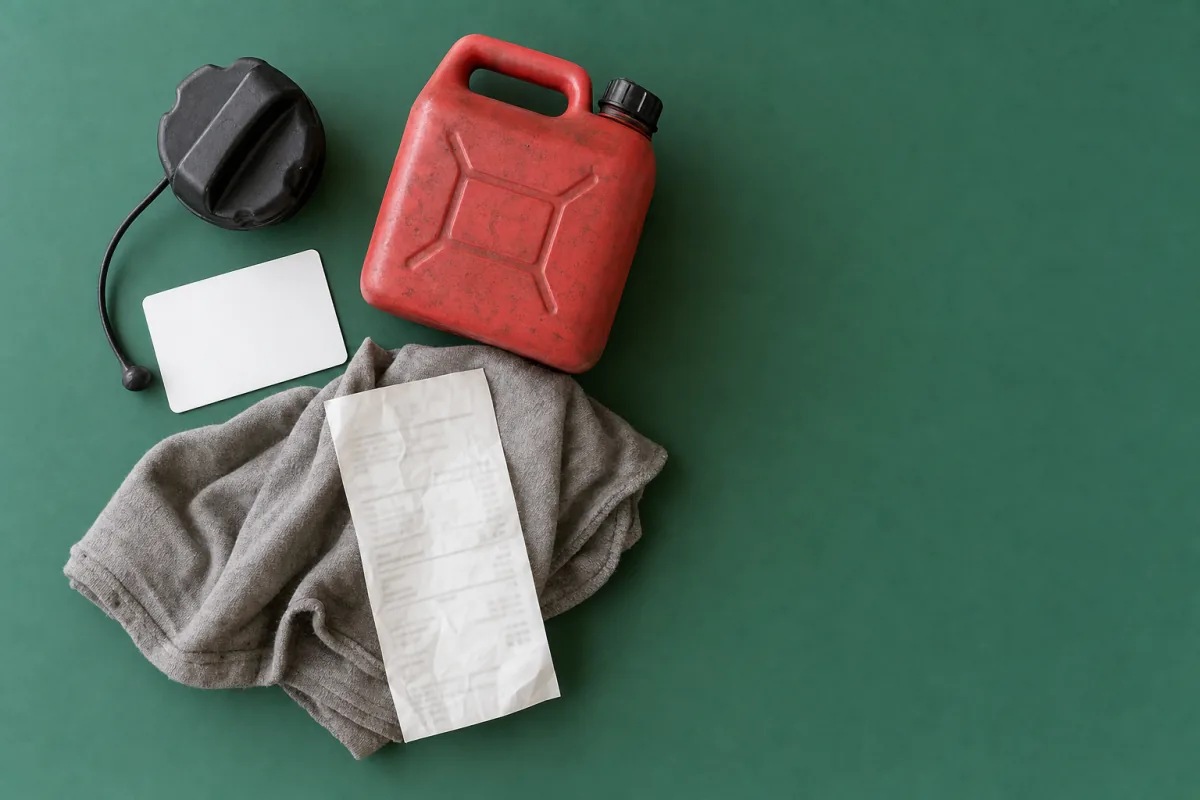
A petrol station makes about fifteen sen on your litre of RON95, and that's before it has paid anyone. Put forty litres in the car and the dealer's share of your money is RM6.1 That's a small number for something so many of us get grumpy about.
Who sets the fifteen sen?
Not the dealer. The margin is one line in the government's Automatic Pricing Mechanism, and the cabinet raised it in 2019 by a little under three sen. Before that, the last revision was in 2008.1
A shop can reprice its crisps on a slow Tuesday. A dealer can't, because the pump price is set under price control law and the margin comes baked into it.3
A rethink has been on the table. In October 2025 the domestic trade minister said a proposal to review the rate had gone to the finance ministry. I couldn't find a new figure published anywhere, so I'm using fifteen and I'd happily be corrected.
The fee that grows when the price does
The margin is per litre. A card fee is a percentage of the whole pump price, and that mismatch is the most interesting thing about this business.
More than 90% of fuel payments had gone digital, according to an industry observer in the New Straits Times. He works with a 1% fee, and on the RM2.05 litre of the time, that took about two sen, or roughly a seventh of the margin.3
That's the trick of it. One percent sounds like nothing because we measure it against the sale, and the dealer doesn't get to keep the sale.
He then turns it into an interest rate of over 1,200% a year, by spreading the fee across a four-day stock cycle.3 I'd leave that one out at dinner, because a card fee isn't a loan, but I can see why he's cross.
Push the pump price up and the fee follows, while the fifteen sen sits still.
What's left of fifteen sen after a 1% card fee
An economist in the same report made the fair reply: going cashless also spares a small station petty cash, counterfeit notes and staff theft.3 I think he's right, though I'd want to see what the theft was costing before I called it a good trade.
Six sen, on a good reading
The same observer says labour, electricity and working capital take another 48.1% of the commission.3 Together with the card fee, that leaves a bit under six sen a litre for management, admin and any profit.
He's arguing the dealers' case and there are no accounts attached, so hold it loosely. It's still the only breakdown I could find.
Where the dealer's fifteen sen goes, by one observer's sums
Say a quiet station sells 5,000 litres a day, a number I've picked purely for the sum. Six sen a litre comes to under RM300 a day.3
Then there's the cash. On that RM2.05 litre the dealer's own cost was RM1.90, and most operators pay for stock before or on delivery.3
The same report puts the working capital they need at between RM100,000 and RM250,000.3 So our hypothetical owner has six figures sitting in a tank under the forecourt, to earn that. When the pump price climbs, I'd expect the tank to tie up more of it.
So why run one at all?
My answer is the shop, though from here on I'm mostly reasoning. In December 2024, an operators' association claimed that "about 98% of stations are reportedly suffering losses" on petrol and diesel, and that many were shifting their focus to convenience stores.4
That's a trade body making its case in a bad year for diesel, so I don't take that number literally. I do believe the direction.
A convenience chain lives on very different sums. Analysts at RHB put MyNews's gross margin at 38.3% for the nine months to July 2025.5 It isn't a forecourt shop, but it's the nearest listed thing I can open.
What a drink can do
At that margin, a RM5 drink and snack brings in about RM1.90 before costs. The pump needs nearly thirteen litres to do the same.5
What I couldn't find is the part you'd really want: how much of a Malaysian dealer's profit comes from the shop, the car wash or any rent on the site. Some dealers own their sites and others run ones owned by an oil company, and I'd guess that changes who keeps what.3
So here's my guess, labelled as one. Fuel is the reason a car stops, and whatever's inside is the reason the place can stay open. I could be wrong, and one dealer's actual books would settle it.
If you run anything on a thin, flat margin, the same sum is worth doing once. Take each percentage fee you pay and measure it against what you keep, not what you sell.
where I looked
- Paul Tan's Automotive News, Gov't approves commission increase for petrol dealers, 2019 paultan.org
- Free Malaysia Today, Govt to announce revised automatic price mechanism rate for RON95, 2025 freemalaysiatoday.com
- New Straits Times, Petrol dealers' hidden burden, 2025 nst.com.my
- The Star, Association claims 3,500 petrol stations suffered RM181mil losses, 2024 thestar.com.my
- The Star, MyNews growth set to accelerate on better margins, 2025 thestar.com.my